What utterly different subjects - Amnesia the game and Amnesia the anime. I'm so very tempted to compare the two if only because they are so incompatible. I guess the only thing they have in common is entertainment, a basic plot, and the inclusion of "amnesia" in them. In the first, it is used as a method to direct the player more than a point of the whole thing (or at least more unusual and less accepted in animes), although there may be a bit of commentary on whether anyone is capable of change and redemption. In the second it is more the point, in my perception, although it also is used as a mechanic to get a girl to meet and love four or five different guys in the unfolding of one anime. For both it, of course, employs the backward-story-telling mechanic in order to make it more complex than it really is. Morsels of plot to feed the player/watcher in order to get them to keep playing....
But this post isn't about Amnesia, it's only about Amnesia.
Amnesia is told very very slowly, quietly, and with an air of fictitious perfection. The guys are too exaggerated, the world too kind and symmetrical, the path of events too charismatic, aromatic, and romantic. I expected it to be a shallow sort of joy at romance - as usual, everything too perfect and too "destined."
I wasn't wrong. It really is mostly just about how guys will fall for girls and meeting people and being loved is nice. And also how everyone should be a good boy or a good girl because wouldn't it be nice if life were just a fanciful dream.
But I can't help but be pleased at exactly how they went about it.
For one, I am untoward attracted to slow philosophic or just peaceful animes. Kimi Ni Todoke, Kino no Tabi, Mushishi, Ergo Proxy, Say I Love You, Witch Hunter Robin, Casshern Sins... all of these are slow at least in part and I like them because of it.
For two, I like unusual animes, and pretty art. This is both of those.
But most of all, this anime seems to really, really respect it's characters. Despite how they are frosted-cake versions of real people, they are shown to at first appear ... flat, boring, stereotypes. Stereotypes that some people like, but insubstantial and just plain unlikable for how one-sided they are.
Rebel, emo, brooding, loner, dark-boy Shin.
Player, suave, charmer, popular, glamorous, seductive Ikki.
Logical, rational, intelligent, unreadable, literal, cold, analytic Kento.
Fun, comedian, antic, merry, bright Toma.
But each is deeper than that. They don't deny or explain away their personality. They are the way they are, but they have their own flaws, cares, loves, and souls. There are some reasons they became who they are, but no excuses. They love, they care in their own way. They have fears and hopes and desires. They are unique and beautiful and deep. They keep their stereotypical actions and behaviors in full, but you realize that that in and of itself is a beautiful face on a beautiful interior.
They want to be ... real. They want to be loved and good.
Shin is struggling to control himself and be a better, worthy individual. He fears and hates what he could be, but he doesn't see much light except in the main character girl. She is a vision of a better world and a better self to him.
Ikki believes the world and the people in it are lies. Everything seems to be about appearance and socializing and control and manipulation. Girls try to get him, but only to use him. He doesn't even know what he wants as he wanders through life, lost and fearing to never know anything true. His love is that single ground for him: something true and real who can show him how to erase the lies and see (begin living) the world for what it really is.
Kento is in a world he doesn't belong in. He doesn't understand it, and it doesn't understand him, despite how hard he tries to figure out it's rules and logic. He works, thinks and researches because that is all he knows how to do, all he can do. But it isn't enough. (...... I have yet to see Kento's story in full)
Toma...... well, the series is still continuing. I don't know who Toma is yet.
I started to enjoy Shin, and then when Ikki appeared I was ready to stake it out and wait for a more interesting character. But then I realized that I was coming to appreciate and even love Ikki too. How could I? He is the stereotype I almost truly detest in real life as well as anime. And yet... he was real and .... struggling to live. Amnesia began to bore its way into my life and understanding. And then today Kento's story began. I already knew I would enjoy his story, but it was only when it was really being told that I realized exactly how beautiful Amnesia is.
Kento is just as stereotypical and overly-exaggerated as ever. But he cares so incredibly much. He wants so much to understand and to do right, but his attempts are always wrong. Still, he keeps trying despite being wrong over and over and over again. It's a deep and human and beautiful thing. The stereotypes are not who these people are. They are their selves --- struggling against the world, in their lives, caring so deeply, but so unable to be understood past how shallow the rest of the world is to them. Shin, Ikki, Kento, and Toma. Each is a completely different stereotype, but all are scared and fighting and caring as hard as they can to be real and alive and true and they are so beautiful because of it. So beautiful and worthy of love, despite completely different appearances, fears, desires, characters, and personalities.
Each one is worthy of your attention and love, and each one is a beautiful being.
Amnesia doesn't blame the world for being judgmental. It doesn't excuse the boys for being stereotypes or flawed. It doesn't declare a moral right or wrong or even how to think of one another. What it does do is describe just how unimportant personality is compared to real deep caring about being alive and good and real and true. I don't have a word for that sort of deep caring, but it is what makes us beautiful and it is inextricably tied up in truth and meaning.
19 February 2013

07 February 2013
ID
Identity.
What an innocuous appearance, hiding some of the most corrosive ideas.
Identity.
You've always believed it was a good thing. To have an identity. To have a name. A status. A place. A niche.
It is identity that chains us to old wrongs. It is identity that blinds us, holds us hostage. It is identity that forbids us change, growth, and branching.
It is identity that makes us ignore, dismiss, hate. It is identity that insists our path is the only path. The sacred way. The holy promise.
It is identity that makes us follow lies, propaganda, corruption. It is identity that makes us barricade, fear, and damn the outside world.
We identify with our country for no good reason. We identify with our religion, and prevent ourselves from seeing the light. We identify with tradition and see no other way. We identify with cliques and drive away the outsiders. We identify with our work, and never learn or improve. We identify with our family, and we are dragged down with their wrongs. We identify with our habits until we forget how to change. We identify with our beliefs, and never forgive and never listen and never understand.
Identity makes us comfortable. It makes us stop asking questions. It makes us blind to who we are and why we are.
Identity is the lie we tell ourselves over and over again until the truth has been buried and safely left to be forgotten.
Do not become an identity. Flow between worlds. Explore, learn, change, grow, commit mistakes, question.
Do not identify with your country, it is meaningless square area filled with average people. Do not identify with religion, it is about the journey, not the place you are now. Do not identify with tradition, it is a false authority. Do not identify with cliques, they are mindless. Do not identify with work, it is a poor substitute for discovery and contribution. Do not identify with family, their values are no better than your own. Do not identify with habits, they are only good until you forget why you do them. Do not identify with beliefs, they are only good until you stop improving them.
Never be comfortable. Never exclude, deny, deafen yourself, blind yourself. Choose what you accept and what you do not, every instance. Do not dismiss the whole for the part. Take what is good, leave what is not. Every. Single. Time.
In others. In yourself. In the world.
Destroy identity and be what you think; until you are not any more.
What an innocuous appearance, hiding some of the most corrosive ideas.
Identity.
You've always believed it was a good thing. To have an identity. To have a name. A status. A place. A niche.
It is identity that chains us to old wrongs. It is identity that blinds us, holds us hostage. It is identity that forbids us change, growth, and branching.
It is identity that makes us ignore, dismiss, hate. It is identity that insists our path is the only path. The sacred way. The holy promise.
It is identity that makes us follow lies, propaganda, corruption. It is identity that makes us barricade, fear, and damn the outside world.
We identify with our country for no good reason. We identify with our religion, and prevent ourselves from seeing the light. We identify with tradition and see no other way. We identify with cliques and drive away the outsiders. We identify with our work, and never learn or improve. We identify with our family, and we are dragged down with their wrongs. We identify with our habits until we forget how to change. We identify with our beliefs, and never forgive and never listen and never understand.
Identity makes us comfortable. It makes us stop asking questions. It makes us blind to who we are and why we are.
Identity is the lie we tell ourselves over and over again until the truth has been buried and safely left to be forgotten.
Do not become an identity. Flow between worlds. Explore, learn, change, grow, commit mistakes, question.
Do not identify with your country, it is meaningless square area filled with average people. Do not identify with religion, it is about the journey, not the place you are now. Do not identify with tradition, it is a false authority. Do not identify with cliques, they are mindless. Do not identify with work, it is a poor substitute for discovery and contribution. Do not identify with family, their values are no better than your own. Do not identify with habits, they are only good until you forget why you do them. Do not identify with beliefs, they are only good until you stop improving them.
Never be comfortable. Never exclude, deny, deafen yourself, blind yourself. Choose what you accept and what you do not, every instance. Do not dismiss the whole for the part. Take what is good, leave what is not. Every. Single. Time.
In others. In yourself. In the world.
Destroy identity and be what you think; until you are not any more.
02 February 2013
Equilibrium
Balance has come home to rest when
Sleep stops being an escape, but a sweet necessity.
Work stops being a chore, but a curious investigation.
Games stop being guilty pleasure, but creations of mystery and magic.
Writing profoundly stops being an apprehensive and selfish foray to try and tear away from darkness, and becomes an escapade to learn what I know and say what I mean. (- vivacious ranging to coax honeyed-ice truths out and to hew them forms.)
I stop needing liberation and start reaching out.
I can and do live like this, once I finally scrape off the bleak veneer.
Sleep stops being an escape, but a sweet necessity.
Work stops being a chore, but a curious investigation.
Games stop being guilty pleasure, but creations of mystery and magic.
Writing profoundly stops being an apprehensive and selfish foray to try and tear away from darkness, and becomes an escapade to learn what I know and say what I mean. (- vivacious ranging to coax honeyed-ice truths out and to hew them forms.)
I stop needing liberation and start reaching out.
I can and do live like this, once I finally scrape off the bleak veneer.
14 January 2013
Ergo Proxy - 10: Existence/Cytotropism
All Episodes: Ergo Proxy Companion Viewing Guide
Previous: Episode 9:Shards of Brilliance/Angel's Share
Next:Episode 11:In the White Darkness/Anamnesis
Existence
Romdeau has begun to fall apart and the lessons considered in the past episodes are rising once more.
What is good for the individual is not necessarily the good for the whole. The reverse as well.
Romdeau is a machine. From every position in society, everyone must perform their roles. "Look at this beautiful world, in which everything has its purpose. We are all created as individual cogs for the betterment of this paradise. Permitted to exist only for the sake of fulfilling reasons that are given in advance."
And once someone loses their raison d'etre, they have no remaining personal will to go on. "You might say he is a broken cog."
Even Daedalus is susceptible to this, with all his intelligence and independence as a leader in the Health and Welfare Bureau. He cares too much for his Re-L. And so he lets her go once more, to pursue her own raison d'etre. ("Which is, of course, the proxy.") And in this selfless act, he begins to lose his sanity. For all he knows, he has sent her to her death, and he will never know when she has perished. He cares for her, more than he cares for himself, but he can do nothing except help her. "I'll always be on your side, Re-L." "This is all for you Re-L."
Re-L, in the town with no people, also notices the irony of purpose. "Maybe it's better here, without any people. ... Working, even though they've lost the very people who gave a reason for their existence. Maybe they didn't have a reason, to begin with."


Maybe it would be better not to think. Work with no reason or purpose. "Maybe it is the one who looks down on them, who is unnecessary" as she said once, long ago. The robots, mindless, are indifferent if there is a populace to serve or not. So can you really say that they ever had a purpose to begin with? And us too... if our purpose disappeared, would we just continue doing everything we always have? If we had no god and no destiny, would anything change? Would it be better if we could simply serve without cares or minds? Is the suffering of independence worth it? (Re-L Daedalus, Raul all serve as examples of the unhappiness it brings.)


"I was just wondering if - if I wasn't here, what would you do?" "How about you. What would you do if I wasn't here?"
In Romdeau autoreivs and humans serve each other equally to make paradise function smoothly. Could our purpose be to serve our own creations? Perhaps we serve the earth? Perhaps it is to find our own purpose?
"What am I here for? The purpose of the trip is to find an answer."
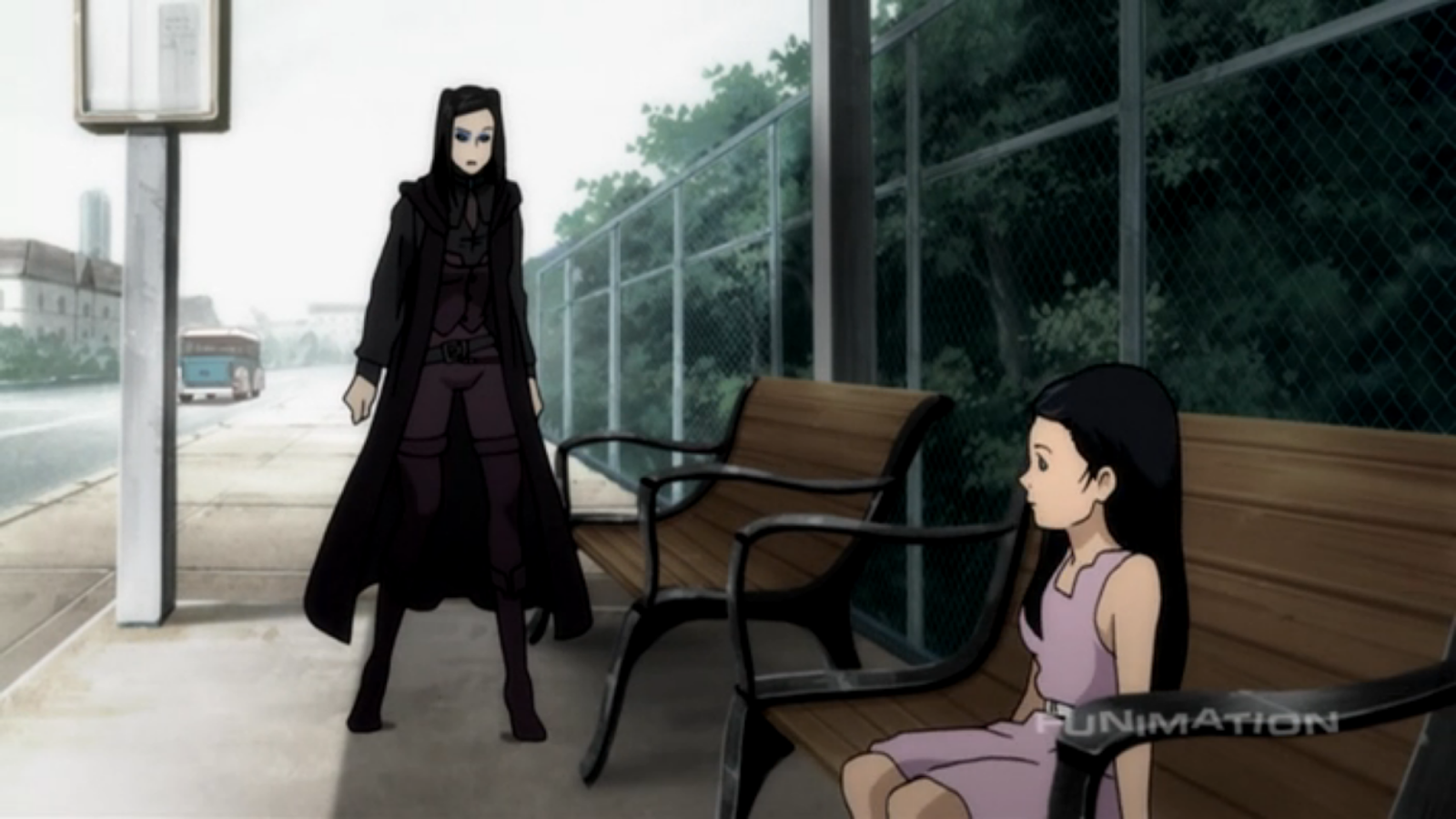
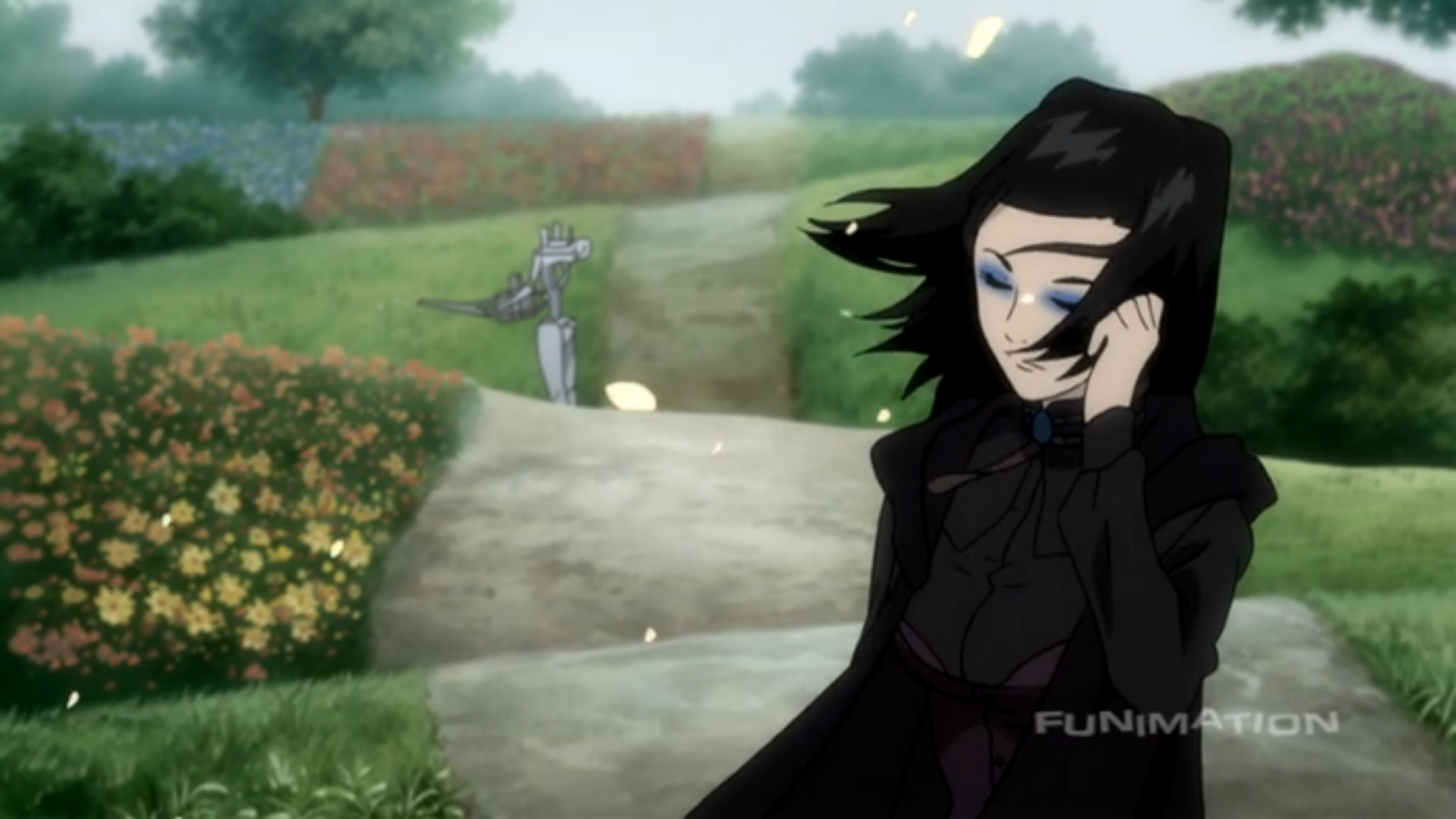

This likely refers to finding an answer to who Vincent Law is, and what exactly a Proxy is and why Romdeau needs one, but in this sentence it also means to find a purpose for why Re-L is. The irony is she was created for the purpose of finding the Proxy, and so is following her predetermined fate beautifully, and yet, perhaps there is something greater that drives her.
"What you seek might be something cruel. And you still want to go?" "Because the truth is in his hands."
...
"Questions are a burden upon others, answers are a burden upon yourself." This repeats the lessons of the last episode: namely that truths and answers, once found, have to be dealt with and it isn't always easy to do so. Whereas questions or ignorance can be dismissed much more easily.
Over and over again the series flirts with the idea of truth and the importance of it. Or rather, how it is just Important yet it has all of these burdens and troubles and fearful repercussions. Why not just be mindless? Look at all the suffering it causes. Look how it brings people to despair and frustration. And all the great minds, everyone who is truly independent, seeks it. "You see, I like answers." (Daedalus) "If I had just done my job and walked away from this mess, I'd still have my life. But I asked my questions. That's my trouble with questions, I still don't know how to take them back." (Re-L) "I think, therefore I am." (Raul) Why. Why is truth so important? No answer is posed by Ergo Proxy, and I can provide no answer either. So I will simply take it for granted that Truth is all-important, and that to seek it is a purpose in and of itself. One that is greater than any pre-determined purpose for a society.


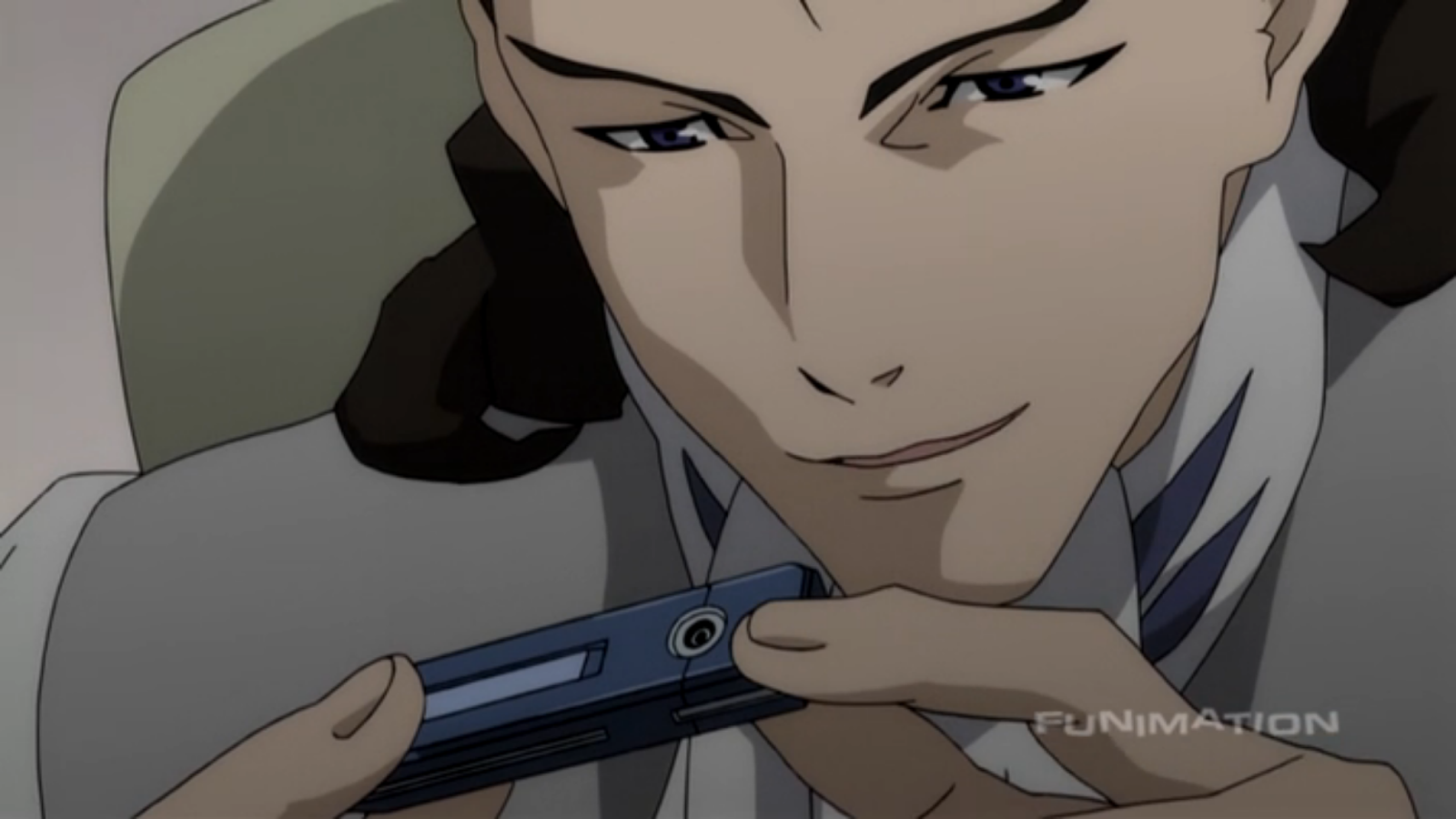
Raul and Daedalus are fun to see interacting. They speak to one another in metaphors because both of them know how to serve both the collective and themselves at once they also know well how to deceive and speak with double-meanings.
"By lending you my toy." "Because it is a toy for adults?" "That's a good boy." Besides the sexual undertones, this is basically Raul saying that he is in control. ("My" toy.) And Daedalus is acquiescing. "A toy for adults." Raul accepts: "That's a good boy."


Raul has failed. The proxy is gone. But Raul has become an independent. "I think, therefore I am." He does not want to die.
"The wound you see is nothing." The physical body's harm is nothing compared to the mental anguish of existentialism.
"You'll probably take this the wrong way, but I'll say it anyhow: I want to save the world."
This is more or less Raul speaking directly to the audience. It is hard to believe, but more or less think he has good intentions at heart.
It was not Raul that attacked Re-L with the cogito virus. It was the Regent attacking his own granddaughter. (Not genetically, of course, but socially his granddaughter) Re-L was too defiant. He must serve his city (his raison d'etre) before he serves his personal interests and Re-L interfered too much with the smooth running of his city. Despite the fact that she was created for the very fact to bring a proxy back.
"This is what 2 minutes and 17 seconds gets you! This amount should be more than enough."


Those are called FP rounds, and they, as shown, kill Amrita cells. Re-L was sent two, as also shown. "The only thing left, is to load it." It is nice that the series shows this information, though you need only wait a few episodes for it to tell you it directly and clearly.
"Emergency stop code acknowledged. Emergency use phase, sequence start. Confirmed." Kristeva being an autoreiv loses contact with the central collective once the power outage begins, and so initiates an autonomous state at that point.
In case there is any question, this dome is different from Romdeau Dome -

There is a possible allusion to a science fiction work. Tarry's convenience store is probably a reference to "For a Breath, I Tarry;" A story about a world where humankind has died off, leaving a world only inhabited by robots and artificial intelligence. I am also reminded of Ray Bradbury's "For There will Come Soft Rains." This is another science fiction, a short story about a family's house which is maintained carefully be years by robotic automation, however things finally go haywire and the house withers and is ruined. I also accidentally came across a screenplay and tv series called "The Starlost" which appears to fundamentally resemble Ergo Proxy. Starlost's plot according to wikipedia: "Foreseeing the destruction of the Earth, humanity builds a multi-generational starship called Earthship Ark .... The ship contains dozens of biospheres, each kilometres across and housing people of different cultures; their goal is to find and seed a new world of a distant star. More than one hundred years into the voyage, an unexplained accident occurs, and the ship goes into emergency mode, whereby each biosphere is sealed off from the others.... Considered an outcast because of his questioning of the way things are .... Devon finds the Cypress Corners elders have been deliberately manipulating the local computer terminal, which they call "The Voice of The Creator""

[VIEW SPOILERS]


All Episodes: Ergo Proxy Companion Viewing Guide
Previous: Episode 9:Shards of Brilliance/Angel's Share
Next:Episode 11:In the White Darkness/Anamnesis
13 January 2013
Ergo Proxy - 9: Shards of Brilliance/Angel's Share
All Episodes: Ergo Proxy Companion Viewing Guide
Previous: Episode 8:Light Beam/Shining Sign
Next:Episode 10:Existence/Cytotropism
Shards of Brilliance
I began writing by once again going through and attempting to discuss each part that seemed interesting or relevant. However that led to me typing up nearly the entire script and furthermore my comments were more or less banal. I essentially finished the episode guide, but it was so poor compared to my real opinion of this episode that I decided to begin from scratch and try again, this time hopefully to capture a little of the real message I think this episode contains.
To me, Kazkis is the real center of this episode.
He is a figure of paradoxes. Agent of Light, with an ever-present smile, a beautiful tower and as many bottles of wine as he could desire. He is the very figure of a king.
But he is also a dark individual. Fermenting in his own despair, flickering out of sanity, and lord of a destroyed land, there is nothing left for Kazkis.
This episode is about war and destruction, love and loneliness, revelry and madness.
It contains many little details which are thrown in to help re-enforce the themes --- Kazkis throws more and more violently the glasses and bottles of wine throughout the episode. First drinking, then tossing the bottle, then breaking a glass, then breaking a bottle, and finally destroying rooms at a time.


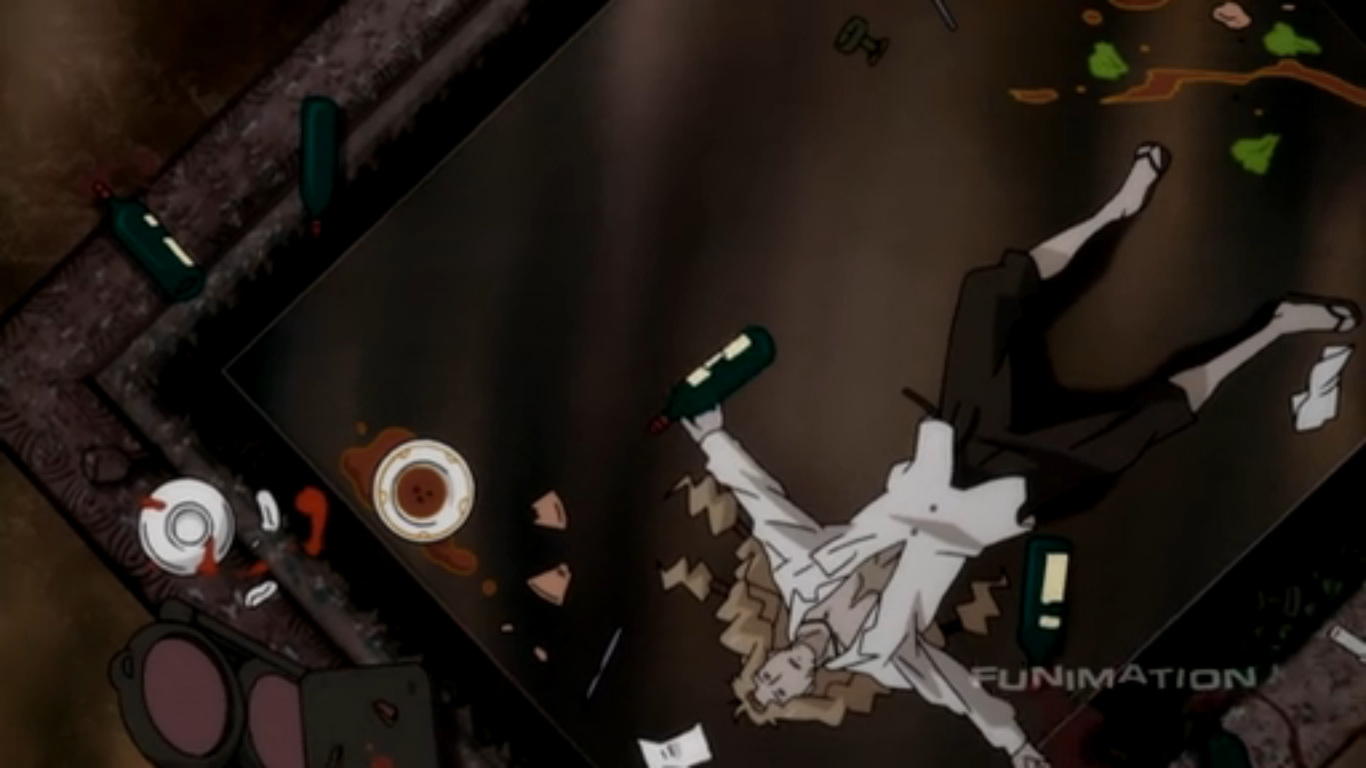

The chandeliers are lit candles, and nearly every room has a burning fireplace.


The display of Asura and Charos flickers right after the first time Vincent gazes up on it.


--- But for me, the real good of the episode comes from Kazkis dialogue and philosophic ravings.
"War is pointless.
But being destroyed is not."
This sentiment resonates deeply with me. I too believe that war is pointless. Winning and losing I do not think there is much value in. Instead I believe it is in the effort and intention that meaning arises. Thus, despite the futility and worthlessness of destruction, I see being destroyed as one of the purest sources of truth there is. When someone finds a truth, a passion, an ideal that they are willing to sacrifice everything else for, the act itself is transient and brims to overflow with meaning.
And yet.
Such beauty may never come to be expressed if there were not great wrong to inspire it... as such, could it be partially Kazkis desire, as a mad artist, to create such great beauty through great destruction?
"Is that why you killed them?"
"You're joking.
They were left behind. And during the long sleep they tried to find their meaning. But they shied away from the fact that they had been abandoned and only found a way to live through mutual destruction."
War, I find, is always like this. No wars for real morals and real good are ever fought. Instead they are petty squabbles of devastating effect between groups of people believing that somehow winning will make them right. How can anyone find meaning from attempting to harm another? And yet... the human race claims to and does it over and over again. Admittedly they convince themselves they are doing it in a defense of what is true and right... but this too is always merged with delusion.
"This is my Asura as it really is. This is what you believed to have seen. Right?
It's just a monument. The citizens built it so that future generations would know just what Asura was like in the past. But it was a worthless effort."


What are monuments? They are to remind us of meaning, but how can they hope to do that? So often I go to see monuments and they hold no meaning for me. Nameless heroes astride great horses. Founders and trailblazers. War memorials stained with blood. And yet, unless I know the thing they are about, they are merely pretty statues. If I do know what they are about, then what purpose are they serving? I already know their meaning.
Pointedly included is the destruction of the last remnant of Asura - As Kazkis changes into proxy form, the display shatters.
"It was too much for anyone, but Monad still accepted those memories, in spite of the repercussions. Because Monad loved you.
But in this display of unrequited love. Monad completely lost you. No, not only Monad. You lost yourself as well. We are the sum of our memories. Erasing the memories etched into ones' own self is the same as losing oneself."
This too I strongly believe. To lose one's mind, one's personality, and one's life memories... is that not true death? Can anyone really claim that death is really only the churning of cells and the increase of entropy except in the strictest of definitions?
And what can a selfless love do, but seek the happiness of their love? Even if it means the destruction of that they love? Would it not be selfish to seek your own happiness over their own?

"Go ahead and suffer. All those who wander in the darkness seek the light. But when they reach the light they turn their eyes away from the blinding glare. You can even sense the pain. The truth is like that too. Someday your eyes will be burnt by the light of truth and you will know eternal darkness. That is the judgement that awaits."
This is one of my favorite lines from the series. It is a dire warning that to believe truth is always good or welcome is a folly. Not only must truth be discovered, but also accepted and faced. Which is not always so easy a task. And yet you are trapped. You must either burn yourself and live with the knowledge, or turn away and cast yourself away from truth. It is all too possible that there are many truths that make both options unacceptable.
--------------------
The rest I have so say are just mundane notes I wish to make - Pino says "ow" while she plays, when most likely she does not feel pain.
The greek statue that Pino looks up to right after falling seems to closest resemble Venus de Milo, and not Hestia/Vesta or Athena. This is surprising since Hestia is associated with the hearth and Athena with war. It isn't Bacchus or Apollo either, whom are associated with poetry, or light, or other relevant themes of the episode. It isn't even an exact portrayal of Venus de Milo, simply a similar piece. There are other such statues and artworks around the palace that seem to just be representing classical decor.

Asura has the symbols that Charos did, so it must be a sun and a moon symbol, not merely the phases of the moon.

[VIEW SPOILERS]

///Reactions:
I admit to a guilty pleasure of transformation scenes. As such, I also appreciate this episode for Vincent's first transition into proxy form.
But, in a more tasteful enjoyment, I love this episode dearly for its many implications about life, suffering, death, and truth. The poetry. The madness.
All Episodes: Ergo Proxy Companion Viewing Guide
Previous: Episode 8:Light Beam/Shining Sign
Next:Episode 10:Existence/Cytotropism
13 December 2012
Ergo Proxy - 8: Light Beam/Shining Sign
All Episodes: Ergo Proxy Companion Viewing Guide
Previous: Episode 7:RE-L124C41+
Next:Episode 9:Shards of Brilliance/Angel's Share
Light Beam
There are references to moonlight, night, and death throughout the entire episode. It starts with Pino seeing a shining light, and then later seeing it again. We see something wavering in the darkness where she was looking. Its the same wavering paper-tentacle-knife-wing used to kill the soldiers of Charos. The name of Charos likely comes from Charon, or the river Styx ferryman who takes the dead to the underworld. Else, it may be from Karas, meaning "black" in greek. The moon phase symbol )O( can be seen on wall inside the tower of Charos when they talk about the woman's legend. "That stuff about the light." "The stories about a light, radiating from an unseen moon."


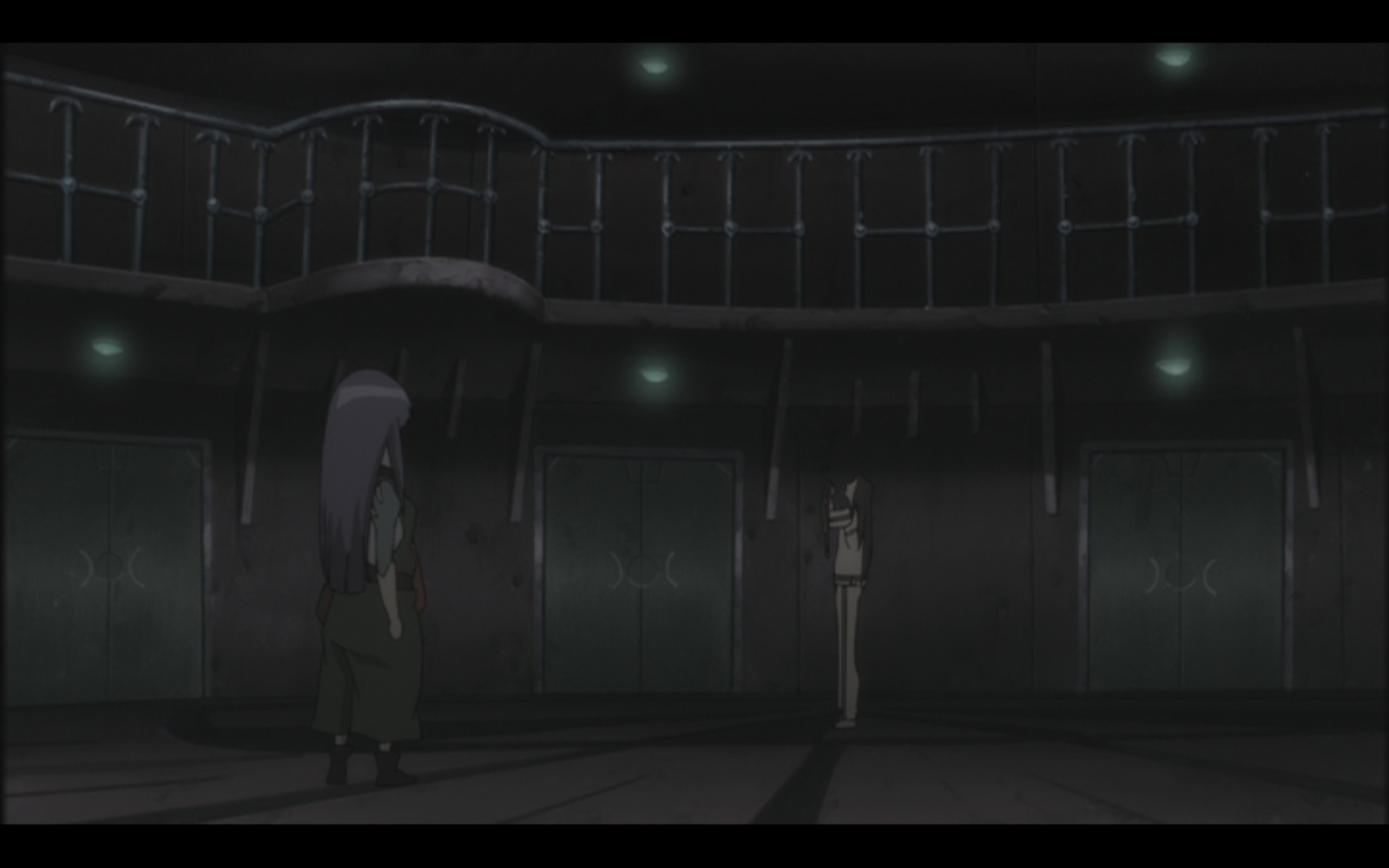 When straight-jacket lady sees the monster, or Proxy. She says "Senex, agent of the moonlight" Agent is another word for Proxy, but Senex does not mean moonlight.
Senex is an archetype from Carl Jung's universal psychology (collective unconscious) and is basically a kind wise father figure or wizard.
Instead of Charos, sometimes it is called Halos, which of course can refer to holiness, as well as light. Similarly Romdeau is sometimes spelled Romdo, Mosque Mosk, Senex Senekis. Re-L Real. I believe that is it, but choosing which way is the correct spelling is definitely something I cannot be sure about if I have gotten right or wrong.
Take note - Charos also has a wombsys and a proxy to power it (the "production" room, the very bodies of our parents, a legend of a monster sleeping underground) yet it has no dome. This place also has the senseless mentality of following orders that Romdeau had. While Charos has much more activity and is in no way a paradise - it similarly thinks asking questions is bad form at least and treacherous at worst. "Once you are on the battlefield, it is best to stop asking those questions."

These people are willing to trade momentary understanding for long term victory - don't increase production, don't grieve, don't hold back in war, don't ask questions.
What is the point of protecting the Mosquito? The war? What is the war about if they are choosing to throw away human lives to keep fighting for the war. Shouldn't it be about protecting human life or the future...?
Omecatl means "two reed" and is an Aztec diety associated with night, wind, and north. Patecatl is father of the Centzon Totochitin and god of life and fertility.
Straight-jacket lady apparently has a name that is never mentioned. Mayahuel. This is another Aztec god associated with fertility, this time a god of a plant for an alchoholic beverage. She is the mother of the Centzon Totochtin.
Pino mimics everything. From Vincent's gagging, to the books she reads, to straight-jacket lady's chant. As Pino learns and grows, Vincent learns and grows in his opinion of her as well. He rejected her humanity and still says he can't tell if she has a soul, but ironically begins to think she is more alive than most other people.
The resemblance to "playing card soldiers" from Alice in Wonderland I only work out to be strange soldiers following nonsense laws for a mad queen.
Bit by bit it can be seen.
Bit by bit it can be heard.
Bit by bit it grows stronger.
Here, there, everywhere.
The last beat. The master comes.
Riding across the moonlight that haunts the shadows and the dark places.
He takes his time.
Bit by bit, bit by bit.......
I hear the pulse of the awakening.
Along the moonlight that haunts the darkness.
It will, with certainty, provide the time.
The pulse of the awakening.
The last beat
The master rides across the moonlight.
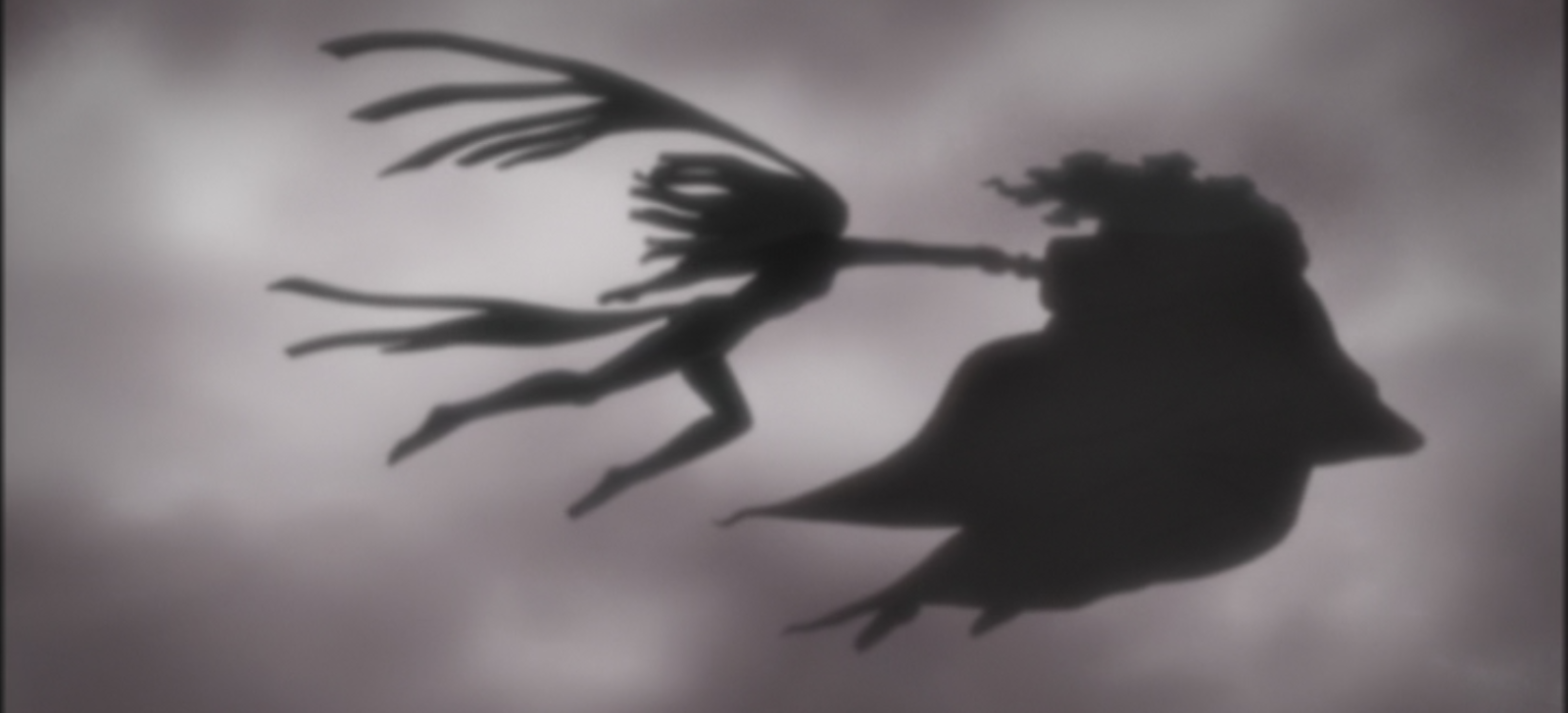
Senex. Agent of the Moonlight.
The drums of war are beating.
It is the music that brings the birth of a new world.
The master comes.
Riding across the moonlight that haunts the shadows and the dark places.
(It is all so beautiful!)
When the battle's done. He will bring to this world. A gift of death.
[VIEW SPOILERS]
[/SPOIERS]
////////////Reactions
Death. Night. Decay. Insanity. Peace.
Monotony. War. Mindlessness. Meaning.
Poetry. Existence. Beauty. Hideousness. Fear. Love.
I do not think this episode has too much specific to say. While it contains many themes and references, and yes alludes to the answers in such a way that cannot be understood, I understand this episode mostly as a mood piece. It also is pleasantly linear and action oriented for a change.
I happen to like weird monsters and transformations and surrealism, so Senex is right up my alley. Their weird fighting dance as well as the chanting poem is enough to entertain me pretty thoroughly despite it not really making any sense. No, their powers and fighting style never make sense past a weak sort of argument that they are enjoying the coming of death and reveling in the act of it with their crazy powers.
In truth, the most meaningful part I get out of it is that sense of beauty, mystery, and despair of the lives of the forgotten. The dance with insanity in an effort to understand it. That ultimate surrender for risk of losing sanity yourself. The infinities of time and space that leave us lost and hopeless, and yet are grand and beautiful while you can stand to stare into the void.
Poetry, like I said. Empty and deep at once.
All Episodes: Ergo Proxy Companion Viewing Guide
Previous: Episode 7:RE-L124C41+
Next:Episode 9:Shards of Brilliance/Angel's Share
Subscribe to:
Posts (Atom)